
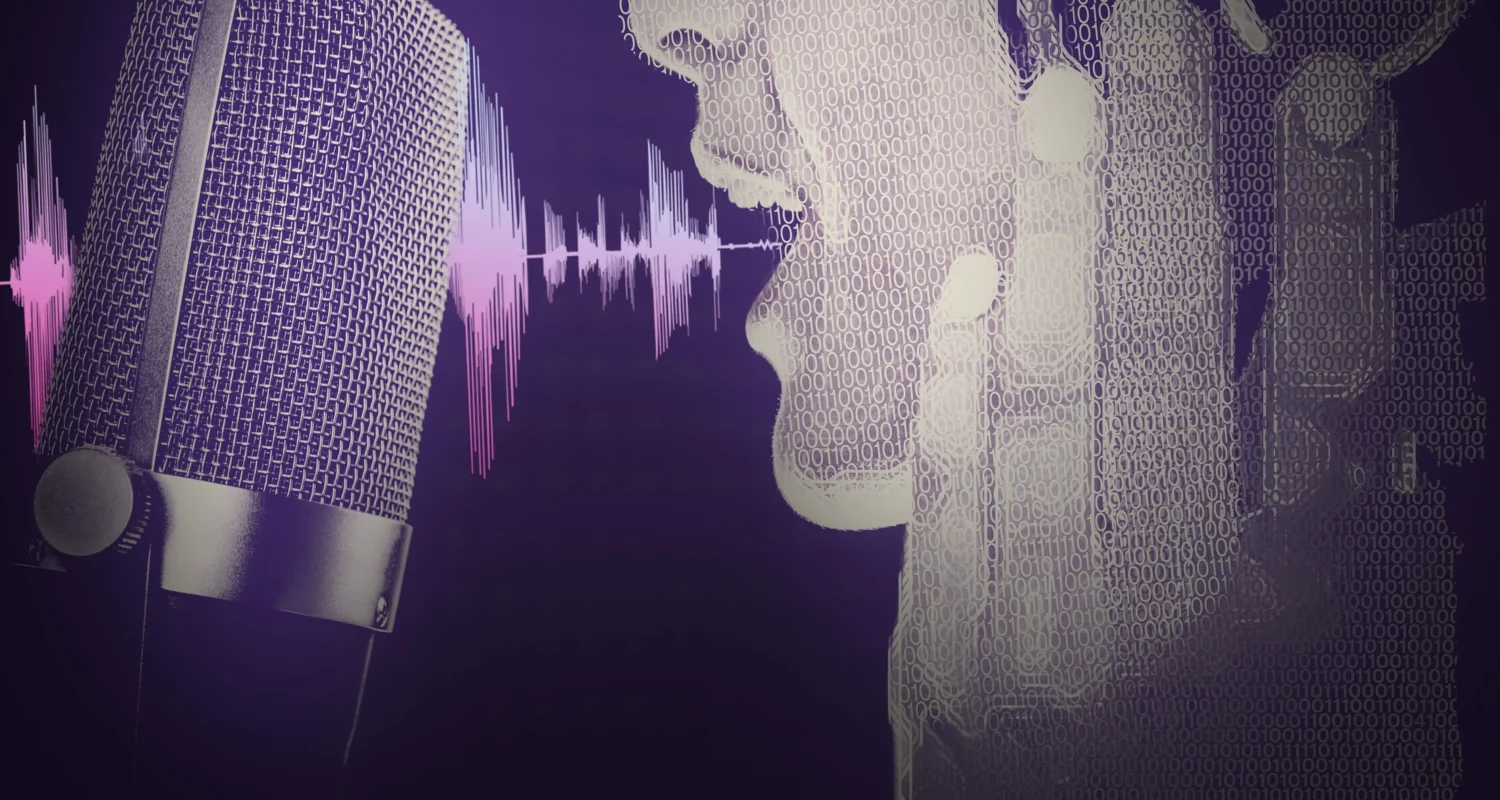
AI voices have reached a level where they are no longer distinguishable from human voices
Can you confidently tell if the person on the other end of the phone is a real person?
Until recently, most people would have answered “yes.” Siri, Alexa, and other familiar AI assistants still have a slightly robotic, stiff, or overly smooth tone that gives them away. Their breath patterns are artificial, intonation is predictable, and emotional expression is limited. Because of these quirks, humans believed they could easily detect the difference between human speech and synthetic sound.
But that confidence is rapidly fading.
In the last few years, AI voice technology has undergone a dramatic transformation. The latest generation of AI-based “voice cloning” systems has achieved a realism so advanced that, in many cases, even trained listeners cannot distinguish an AI-produced voice from a human one.
The line between “AI voice” and “real human voice” is disappearing more quickly than anyone expected.
This turning point was highlighted in a study published in the scientific journal PLoS One on September 24, 2025.
Is AI voice really indistinguishable from a human voice?
AI voice synthesis has evolved from simple robotic tones into rich, expressive, emotionally nuanced voices. This advancement is affecting daily life more broadly than people realize.
Today, AI-generated voices appear in:
customer support systems
virtual assistants
language-learning apps
navigation voices
audiobooks
film dubbing
content creation tools
advertising
video games
And voice cloning — a highly advanced form of AI voice generation — is taking center stage.
Voice cloning allows AI to recreate the voice of a specific individual using only a few minutes of recorded audio. With the right model, it can capture tone, rhythm, accent, breathiness, emotion, and even subtle quirks like pauses or laughter.
This makes the AI-generated voice almost indistinguishable from the real person. In some cases, friends or family members cannot tell the difference.
To understand how close this technology is to human-level realism, researchers at Queen Mary University of London (QMUL) conducted one of the largest experiments ever done on AI voice perception.
How close is AI voice to real human voice? The experiment that shocked listeners
The QMUL research team designed an experiment using 40 real human voices and two categories of AI voices:
-
A generic AI voice created from scratch
-
A “voice clone” generated by imitating a specific real person’s voice
Adult participants living in the UK were asked to listen to many voice samples and identify whether each sample came from a real human or an AI. They also had to rate how “real” each voice sounded.
The findings were surprising — even alarming.
What people still recognize: AI voices created from scratch
When the AI used standard synthesized voices, around 60 percent of listeners could correctly identify that the audio was artificial.
This means that the traditional type of AI voices — the ones used by digital assistants — still contain detectable patterns. Their rhythm, breath, timing, and emotional tone are less natural, so people can often sense something “off.”
Where humans lose the ability to distinguish: voice cloning
However, when participants listened to AI-generated voice clones, the accuracy dropped dramatically.
More than half of the listeners mistaken AI voice clones for actual human voices. Their accuracy fell close to pure chance, meaning they might as well have been flipping a coin.
In simple terms:
People can no longer reliably tell a cloned AI voice apart from the real person it is imitating.
This is a historic moment. For the first time in human history, artificial voices have crossed the threshold of detectability. This means:
Anyone can now hear a voice — on the phone, in a video, in a voicemail — and be completely unsure whether it’s a real person or a digital imitation.
The psychological impact: the loss of intuition
The QMUL study found that participants expressed declining confidence in their judgments. Even when they correctly identified a voice, many admitted, “I’m not sure,” or “It sounded human, but I’m guessing.”
Our intuitive ability to detect authenticity is being eroded.
For centuries, humans have relied on subtle cues like tone, hesitation, breathing, vocal tension, and emotional warmth to judge whether a voice is genuine. Voice cloning technology has learned to mimic these cues with frightening accuracy.
Which voice sounds more real? Humans and AI tied
An unexpected finding from the study was that listeners rated both AI voices and human voices almost equally when asked, “Which sounds more real?”
This does not mean AI voices sound better — not yet. But it does mean:
The average person now perceives high-quality AI and human voices as equally real.
We have not reached a state where AI voices sound “more real than humans,” a condition sometimes referred to as hyperrealism. However, we are rapidly approaching a level where realism is indistinguishable.
When people hear a voice clone, most assume it is simply “a well-recorded human voice.”
How did AI voices get so realistic so fast?
Several factors contributed to this sudden leap in realism:
-
Massive datasets
AI voice models now train on enormous collections of human speech, capturing every nuance of tone, pitch, rhythm, accent, and breathing. -
Advanced neural architecture
Modern generative models can understand not just pronunciation but emotional patterns, natural hesitations, spontaneous reactions, and conversational rhythm. -
Better prosody modeling
AI can now shape a sentence with natural rise and fall, just like a human speaking emotionally or casually. -
Micro-intonation and breathing
Today’s voice cloning systems capture tiny details like nasal qualities, soft breaths, and micro-pauses. -
Universal voice adaptation
AI adapts quickly to specific vocal styles, making personalization almost effortless.
Together, these advancements mean that a voice clone today is dramatically more realistic than voice clones from even two or three years ago.
Everyday consequences: a world where we cannot trust our ears
The growing realism of AI voices has real-world implications.
Some are beneficial:
Instant audio generation
Affordable audiobook production
Accessible content for visually impaired users
Natural-sounding teaching assistants
Personalized voice-based apps
But there are risks as well:
Phone scams impersonating family members
Fraudulent voice messages
Fake political speeches
Manipulated media
Misinformation spread via cloned audio
If humans cannot distinguish real from artificial, verifying identity through voice alone becomes impossible.
Imagine receiving a phone call from someone who sounds exactly like your spouse, asking urgently for help. Would you know it’s fake?
That is the future voice cloning has created.
The disappearance of the line between humans and AI
The key takeaway from the QMUL study is this:
The difference between an AI voice and a human voice is no longer obvious.
It is becoming psychological rather than acoustic.
Today, we rely on instinct to judge authenticity, but that instinct is weakening. And as AI voice models continue evolving, the distinction will blur even further.
We may soon enter a world where hearing someone speak does not confirm their presence or identity — a world where sound is no longer evidence.