
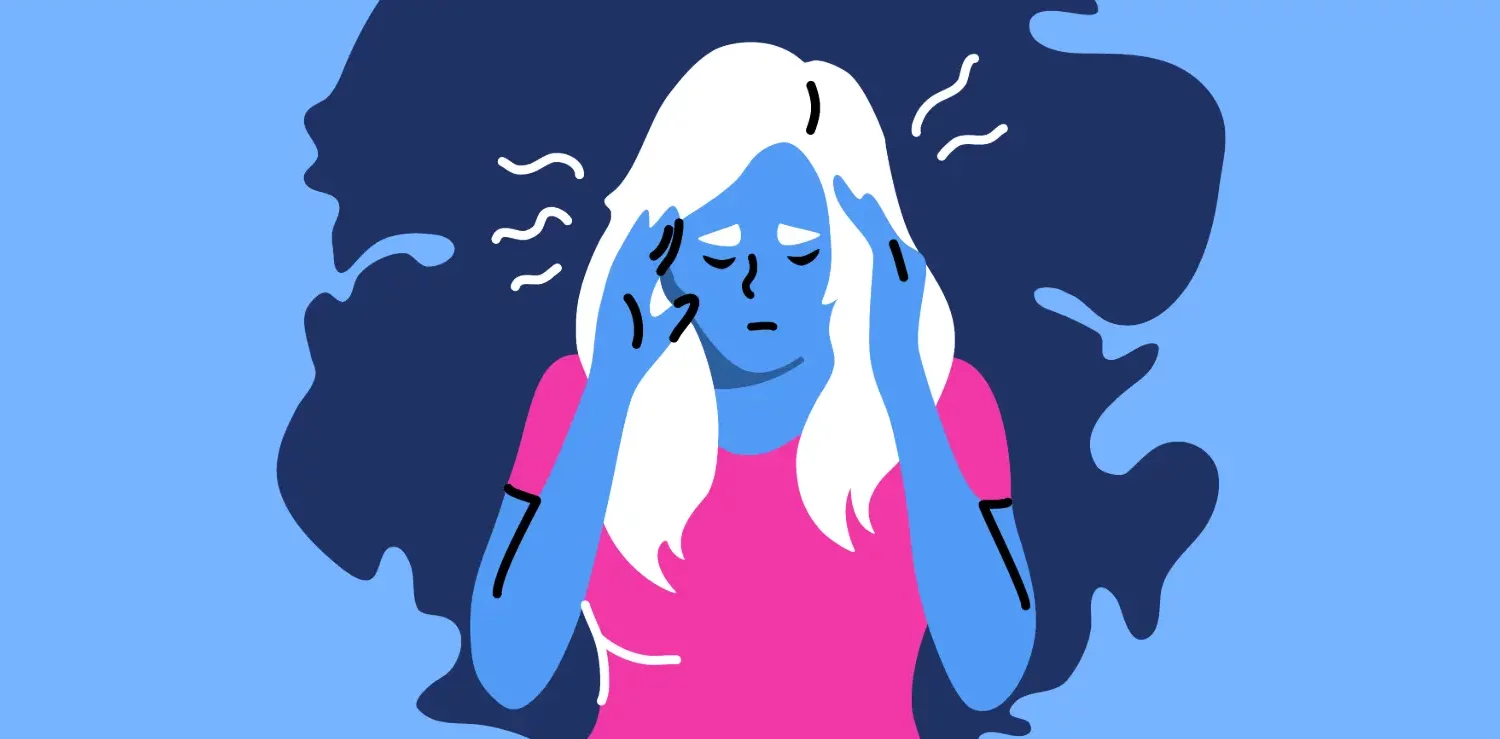
And does a bad thought make a bad person?
Why do scary thoughts sometimes appear in our heads?
There are hundreds of possible causes. For example, depression, low self-esteem, pent-up anxiety, and repressed emotions all provide fertile ground for fearful thoughts.
Often, frightening, angry, and aggressive images arise in the mind as a result of prolonged stress and exposure to traumatic situations . This is exactly what happened in the life of our reader.
Relationship difficulties with a partner, a difficult home situation, worries about a child, an uncertain future. Even on the surface, it’s easy to spot serious traumatic and stressful factors that trigger the psyche to flood the mind with terrifying thoughts.
And if these “guests”If thoughts come and go from your mind easily, effortlessly, and don’t provoke action, there’s no point in beating yourself up . But focusing on such thoughts, consciously developing them, or searching for logic in them isn’t the best solution either.
“Getting stuck in these kinds of thoughts keeps us from finding a real solution. You could, for example, seek help from a free or beginning psychologist, or turn to friends and family for help. By focusing on thoughts like, ‘No husband, no problem,’ or on how wrong we are to think this way, we waste a huge amount of energy fighting ourselves, and ultimately, there’s simply no energy left to find a real solution.”
How to help yourself if you feel like you’re a really bad person because you’re thinking bad things
Scary thoughts are more of a symptom than an independent phenomenon. And when faced with nightmarish ideas and images in your head, it’s important to remember: I am not what I think . Thinking about something cruel and scary doesn’t mean you want it or will eventually commit it.
Thoughts (even the most cruel and frightening ones) are just thoughts. Thousands of thoughts arise in our minds every day, and not all of them attract our attention. We react more strongly to the scary ones because we’re afraid of them, and our internal value compass signals, “Stop, this is definitely not what I want to do or what kind of person I want to be!”
Most often, when frightened by a terrifying thought, a person tries hard to suppress it. The paradox is that this relentless struggle only reinforces the terrifying thoughts and makes them return again and again. The pattern goes something like this:
- A scary thought evokes feelings of guilt and the fear of being a bad person →
- Fear and guilt provoke self-flagellation in the spirit of “What kind of person am I!” and “How can you even think about such things!” →
- Aggression directed at oneself depresses and adds to the emotional burden →
- the psychological background becomes increasingly “dark”, and scary thoughts arise even more often.
Feelings of guilt and shame mask and suppress the emotions and needs that initially triggered the scary thoughts. Let’s look at a real-life example from our editorial staff member:
“In the days after giving birth, I constantly felt like I couldn’t cope. I wasn’t feeding my baby properly, I wasn’t taking him for walks enough, I didn’t always understand what the baby wanted—it wasn’t a mother, it was a disaster. Why I felt this way, whether there were objective reasons for it—I didn’t have the time or energy to figure it out. As a result, fatigue, shame, and guilt accumulated and multiplied, and thoughts popped into my head: ‘What if I just leave the stroller at the store and disappear?’ This made it even worse, because here it was—yet another example of what a worthless mother I was.”
The source of such thoughts is fatigue, lack of time for oneself, and a lack of self-confidence. Perhaps there’s also pressure from doctors and relatives, who always have hundreds of complaints about new mothers. Postpartum depression, intense anxiety about the baby, and perfectionism, which insists, “Good mothers’ babies don’t cry; good mothers are always happy and smiling,” are also possible.
Uncovering, understanding, and working through the roots of scary thoughts is a healthy way to overcome them. But in a vulnerable state, a person easily believes all the negative things they hear around them and inside their head. But showing compassion and support to oneself can be extremely difficult.
“The right decision is to treat such thoughts as a signal that it is important to pay attention to yourself.”
So, when faced with scary thoughts, the right question to ask yourself is, “Why am I thinking about this?” and not, “How can I even think about this?!” The latter pushes us into a vicious cycle of despair and negative thinking, Irina notes.
Here’s a quick self-help checklist for dealing with negative thoughts from our expert:
- Tell yourself: “These are just thoughts, they certainly don’t make me a “bad, different” person.”
- Admit: “Yes, I have scary thoughts sometimes, that’s normal. Sometimes even the most harmless people in the world think bad and scary thoughts.”
- Try to understand what’s behind the scary thought: “How and what have I been feeling lately? What’s been going on in my life? What needs am I ignoring/failing to meet?”
To summarize: when working with scary thoughts, you need to normalize the situation and shift your focus to your emotions and seeking support.
When scary thoughts require you to see a psychologist
Let’s reiterate: in difficult life situations, fearful thoughts can arise more frequently. While recurring negative thoughts alone don’t lead to disorders or hysterical/paranoid states, Irina notes, when combined, they cause significant damage to a person’s psyche and overall well-being.
“You should be concerned (in the sense of ‘consulting a specialist’) if thoughts become obsessive and compulsive. That is, if they recur over and over again and trigger the urge to act. Otherwise, as we’ve said before, even the most cruel thoughts are just thoughts; there’s no need to scold or blame yourself for them.”
You should also consider visiting a psychologist if scary thoughts are deeply rooted, interfering with your ability to live a full life, causing panic and acute attacks of anxiety, shame, or helplessness.
Here are a few more signs that you should seek professional help:
- Frightening thoughts arise constantly and play in my head like a broken record.
- At the same time, a person suffers emotionally, anxiety increases, unjustified fears and a feeling of despair arise.
- It is difficult for a person to control himself and control anger, anxiety, and aggression.
- I regularly have the feeling that “I feel like I’m going crazy.”
“Sometimes, obsessive thoughts are diagnosed as OCD (obsessive-compulsive disorder), anxiety, or depressive disorders, but they are treatable and can be treated! There’s no reason to panic in any case. There’s no need to overreact either: not every case of frightening obsessive thoughts indicates a disorder.”
Which psychotherapist is best to see to deal with scary thoughts?
Irina recommends considering two approaches: cognitive behavioral therapy (CBT) and acceptance and commitment therapy (ACT).
In CBT, therapists primarily work with the content of thoughts. They carefully analyze the wording and create alternative “sounds” that aren’t frightening or evoke feelings of guilt. They also examine the veracity and realism of frightening ideas and seek the causes of specific thoughts, explains our expert.
Incidentally, CBT isn’t just for dealing with evil thoughts and ideas about harming someone. For example, cognitive behavioral therapy would have been suitable for another anonymous reader of ours who found herself trapped in a difficult life situation.
“My mother lives alone in another city and drinks heavily. I often think about how one day she’ll get sick, and I’ll have to leave my wonderful life in the capital and go look after her. Or she’ll die and lie alone in her apartment for several days. The latter scenario conjures up the most terrifying images from the crime news: ‘A lonely woman died in her apartment, and cats gnawed her to pieces.'”
In CBT, a specialist helps a person not suppress their thoughts or run from them, but acknowledge, notice, and analyze the situation in which these thoughts arise, says Irina.
This comprehensive analysis of content ultimately leads to thoughts losing their power over a person: instead of frightening images, real tasks that can be solved appear, and feelings that can be worked with become clearer.
“I attended psychotherapy for this issue. The therapist advised me to focus on myself: work, hobbies, and my well-being. She says I’m taking on too much and trying to overprotect an adult who is responsible for their own health and lifestyle. The psychologist advised me to speak openly about my feelings and offer my mother help—find a drug addiction specialist and help her get out of this situation.”
Understanding that behind the scary thought lies anxiety and a sense of responsibility for someone else’s life, we get the chance to shed this unnecessary, heavy responsibility. And along with it, let go of the frightening images in our heads.
However, sometimes the defeated monster from under the bed quietly creeps into the closet. One nightmarish narrative of consciousness transforms into another, and a new demand arises: where there was once hyper-responsibility, guilt often appears.
“I told my mom I was worried about her lifestyle, but she said everything was fine. The last time I was worried, my mom started texting me nasty things in a frantic state, and I blocked her. We don’t talk anymore, and I feel better. But, of course, I still worry, and sometimes I think: if she died, I’d have one less headache. These thoughts make me incredibly scared, I’m tormented by a terrible feeling of guilt, and I feel like a bad daughter.”
In this case, you can turn to acceptance and commitment therapy (ACT) . It focuses not on the content of thoughts, but on the skill of separating from them, explains Irina. A person still learns to notice their thoughts (rather than denying or avoiding them), but without engaging in them or dwelling on them, simply allowing them to be.
An example of this separation technique is “Leaves on the Water”.
No matter how terrifying the images from the depths of your consciousness may seem, remember: they are not truth. Thoughts are just thoughts, and you are free to determine which ones are important to you and which are just noise caused by stress and fatigue.