
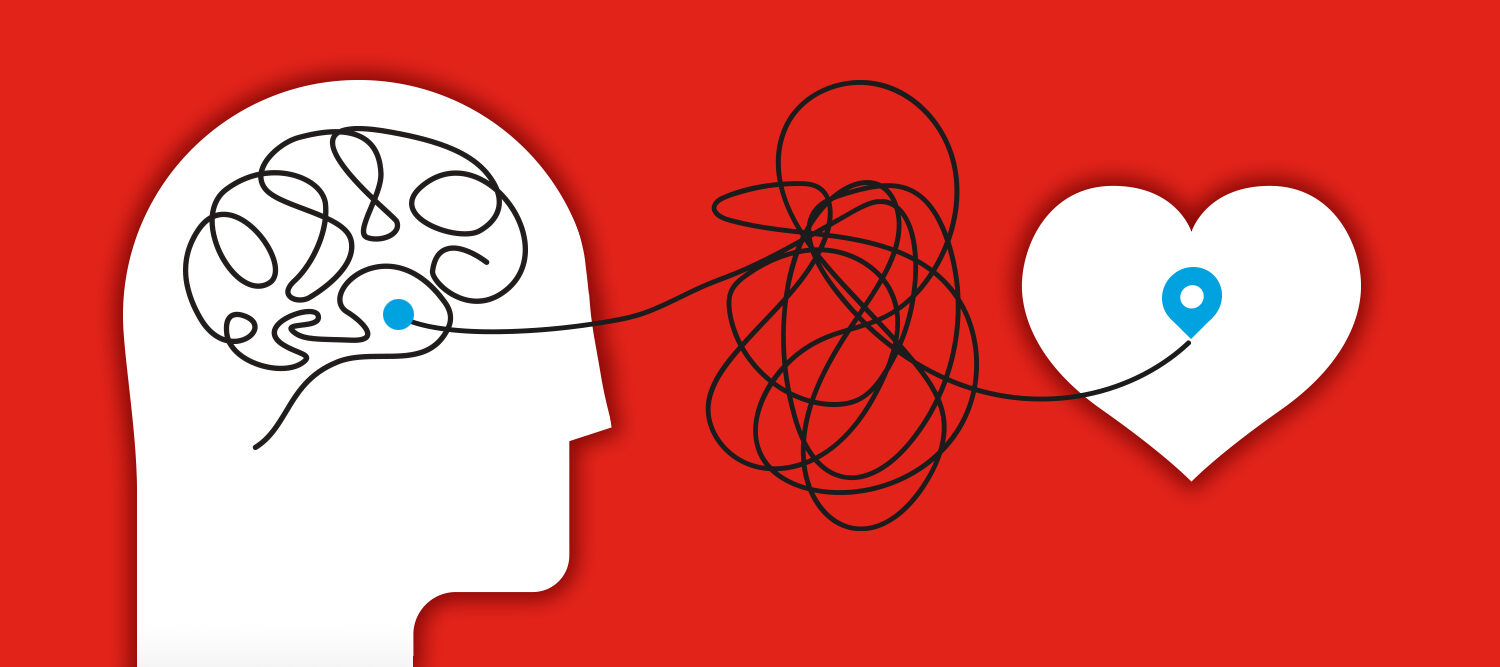
Is falling in love often, deeply, and quickly a superpower or a pathology? Let’s find out with a psychologist.
From this article you will learn:
- What is falling in love and when does it become a problem ?
- What do you call people who constantly fall in love ?
- Why is falling in love so scary and pleasant at the same time?
- What does the degree of falling in love depend on and is it possible to “ regulate ” it?
What is amorousness?
According to the dictionary of sexology, amorousness is a trait characterized by frequent, intense, and short-lived infatuations with someone. Amorous people typically notice only superficial qualities and physical characteristics in the objects of their affection.
This definition seems to somewhat discredit amorous individuals: it turns out that everyone, without exception, does not look deeply into a person, judges them by their appearance, and does not choose to stay with the object of their passion for long.
But we shouldn’t label everyone as fickle and superficial. Spanish researchers have found that the degree to which people fall in love depends on their attachment style.
“A predisposition to anxious attachment is associated with a high intensity of falling in love due to a fear of abandonment. This fear can trigger an obsessive thought of ‘I’ll be abandoned’ and a strong ‘protective’ desire for union and reciprocity. <…> In contrast, people with an avoidant attachment style are afraid of depending on others and succumbing to falling in love due to a lack of security and a fear of intimacy.”
It turns out that some people are easily enchanted and fall in love because they’re afraid of losing someone. And to keep their loved one close, they’re willing to go to the extreme of intimacy—for example, moving in together or getting married within a couple of weeks of meeting (and this can happen several times in their lives). Others, however, are so afraid of opening up to someone that they prefer to change their partner every month.
Falling in love can be a symptom of self-doubt, fear of loneliness, anxiety, and a desire to enter into a relationship as soon as possible to avoid being alone and facing pressure from friends and family. Thus, falling in love can sometimes be a way for people to fulfill their own needs , such as security or recognition.
Conclusion: falling in love is a trait shaped by life experience, fears, and other psychological characteristics. We’ll explore these below.
“The early phase of love is an extreme neurobiological state,” writes endocrinologist Krishna G Seshadri, MD. Falling in love causes the same symptoms as severe stress: increased heart rate, sweating, and flushing. And, of course, butterflies in the stomach—that is, increased intestinal peristalsis.
Moreover, in people in love, cortisol and norepinephrine , the main stress hormones, surge. In this state, a person naturally begins to seek ways to reduce anxiety and calm the endocrine system. This can be achieved by achieving the desired intimacy with a potential partner and experiencing pleasure from contact with them.
Thus, the intense stress of falling in love becomes a trigger for establishing new social connections and helps overcome the fear of change, says Dr. Krishna G Seshadri.
“Positive social interactions and pair bonds appear to relieve stress through oxytocin, which promotes security and support. Thus, it appears that initial anxiety and stress are an integral component of early love, which is consummated through the ‘cold’ created by love and deep connection.”
However, some people don’t need such a chill: many amorous people know how to enjoy their hormonal “fever” of love. And instead of oxytocin, they enjoy powerful surges of endorphins —the hormones that produce instant gratification.
It turns out that falling in love can be characteristic of those who are tolerant of constant emotional roller coasters. Or of those who are dependent on them: in these cases, a person deliberately provokes romantic moods in order to fully enjoy the hormonal roller coaster. As a result, every month or two, the amorous person acquires a new object of affection, and this object also becomes the source of an invigorating cortisol surge.
This increased tendency to fall in love (not motivated by the fear of loneliness, as in the case of the anxious attachment type) is called emophilia .
Irina Kuzina notes that a complex set of factors influences the development of emophilia, including a person’s usual attachment style, impulsivity, and emotionality.
“Impulsivity can trigger frequent falling in love. Vivid flashes of emotion flicker and fade away quickly because it’s difficult for a person to focus on one object of affection . “
Moreover, emophilia is linked to ideas about falling in love and love (and the tendency to believe myths about these feelings). For example, those who believe in “once and for all” are less likely to succumb to and believe in momentary interests in others than those committed to ideas of love at first sight or chemical compatibility.
Personality also greatly influences the degree of amorousness and the development of emophilia, particularly openness —an appetite and willingness to embrace new experiences.
 “For example, one person takes a long time to open up (and therefore falls in love rarely). Another, amorous person, approaches someone instantly, creating a perfect image of their potential partner: ‘He was polite and joked a lot—that’s clearly flirting! We also share similar interests—that’s definitely destiny!'”
Falling in love can also be linked to an interest in art. Many creative people call themselves amorous and say this feeling is a source of inspiration that doesn’t require reciprocity.
So, for those in love, one mysterious glance from a stranger is sometimes enough to send them into a blissful trance of feelings and a free hormonal rush for days to come. It sounds fun, but this concept also has significant downsides.
The dangers of being too amorous
Emophilia and the habit of falling in love frequently aren’t always problematic. It all depends on what a person gains from their romantic “adventures” and what they lose, our expert notes.
“If this is a recurring scenario and the feelings are truly intense, almost obsessive (without sufficient connection and getting to know each other), then this scenario is likely considered unhealthy. Because in this case, it can be difficult for a person to build a serious, strong relationship, and the risk of ending up in a codependent or abusive one increases.”
The thing is, falling in love sometimes blurs your vision. You get completely absorbed in your emotions and sensations (under the influence of those same hormones) and don’t notice warning signs. For example, the object of your affection:
- suspiciously often forgets his wallet at home and is always expecting some kind of sacrifices and gifts;
- constantly postpones meetings, stumbling over his own excuses;
- provokes feelings of guilt and shame, hiding insults behind a joking tone;
- begs to try questionable sexual practices and generally uses pressure to force intimate relations;
- insists on unprotected and unsafe contacts, manipulating with phrases like: “I don’t need tests, I’m definitely healthy, are you doubting me?!” or “I’m definitely infertile, I’ve never been pregnant, and everything will be fine now.”
In a sober state, these red flags are hard to miss. But overly amorous people sometimes unconsciously sacrifice security for pleasure and the hope of preserving their next relationship. This is especially likely if each new crush is instantly elevated to the title of “love of my life.”
“If falling in love is combined with impulsivity and emotional dysregulation, you can give in to impulse and do something potentially harmful to yourself or others. For example, you might miss work deadlines to spend more time with your loved one, or, having fallen in love with someone you’re not single for and imagining a future together, you might start writing threats to his wife.”
Irina also reminds us that falling in love can be critically energy-consuming. Vivid outbursts of emotion must be processed by the psyche. If this doesn’t happen, colossal stress accumulates, and the euphoria of falling in love gives way to severe apathy and depression.
Finally, uncontrolled emophilia can alienate a person from themselves. Dissolving into one partner after another, it’s easy to become lost: “Who am I and what do I want? What’s important to me in a relationship, and who would I want by my side?”
Interestingly, people with borderline personality disorder chronically struggle with similar issues . And in some cases, increased amorousness correlates with this diagnosis.
How to “Adjust” Your Level of Falling in Love
If you’re repeatedly overcome by a wild attraction to people who sometimes easily score red flag strikes, it’s time to think about developing a braking system. And its key component is awareness .
For those who want to stop falling in love nonstop, Irina suggests this approach: when you feel yourself falling in love, slow down, literally, physically. Stop, sit down, take a piece of paper and a pen, and answer the questions.
- What am I missing right now? For example, understanding, attention, a sense of fulfillment, confidence in my attractiveness, sex, hugs, support.
- Can I get this in a different way or with a different person? For example, by going for a walk with a friend, talking to a psychologist, going to the gym, planning trips to the theater/cafe/amusement park/trip.
- Do I know the object of my affection well enough? What do I know about them as a person? What do they value, how do they interact with others, what do they enjoy talking about? Is they interested in learning the same about me?
- Does this situation remind me of a scenario from the past where I ended up suffering? What steps am I repeating?
- How do I imagine the person I’m falling in love with? What image do I conjure up? What are their values? What do they strive for, what’s important to them?
- What in his behavior corresponds to this image, and what does not?
In any case, before you indulge in blind adoration and allow yourself to neglect other areas of your life for the sake of a new crush, give yourself a trial period. Determine exactly how much time you’re willing to spend getting to know the person better (from a month to six months). Dates, short get-togethers, and trips are fine during this time. However, it’s best to refrain from telling loved ones, “This is definitely destiny, I only want to be with him/her.”
“In the long term, it makes sense to analyze your relationship experiences: what scenarios have you encountered most often? It’s best to do this with a psychologist: formulate your ideas about relationships, discuss the feasibility of these ideas, and identify the needs that come to the forefront. By understanding all this, we come to an understanding of ourselves, which transforms spontaneous infatuations into conscious attention to our emotions and needs.”
In the opposite cases, when you want to fall in love, but it just doesn’t work out, it also makes sense to have an honest conversation with yourself.
Why can’t I fall in love? Is it because I don’t trust people at all? Is it because I don’t like anyone? Am I looking for people I might like, or am I just hanging out with the same crowd? Am I afraid to get close to someone, and am I holding back my feelings for fear of rejection? Do I even believe I have a chance of meeting someone and building a happy relationship?
“Here, psychotherapy comes to the rescue again: answering these questions alone is extremely difficult. It can also be that there’s something else behind the desire to fall in love. For example, a need for new, exciting experiences, a desire for recognition and understanding, an emotional connection—and then you can consider how to achieve this in other ways, not just through falling in love.”
It’s unlikely that you can force yourself to fall in love: people can’t control the flow of their feelings and emotions. But trying to understand the reasons behind your coldness or excessive passion is, in any case, the ticket to a happy relationship with yourself and the world around you.