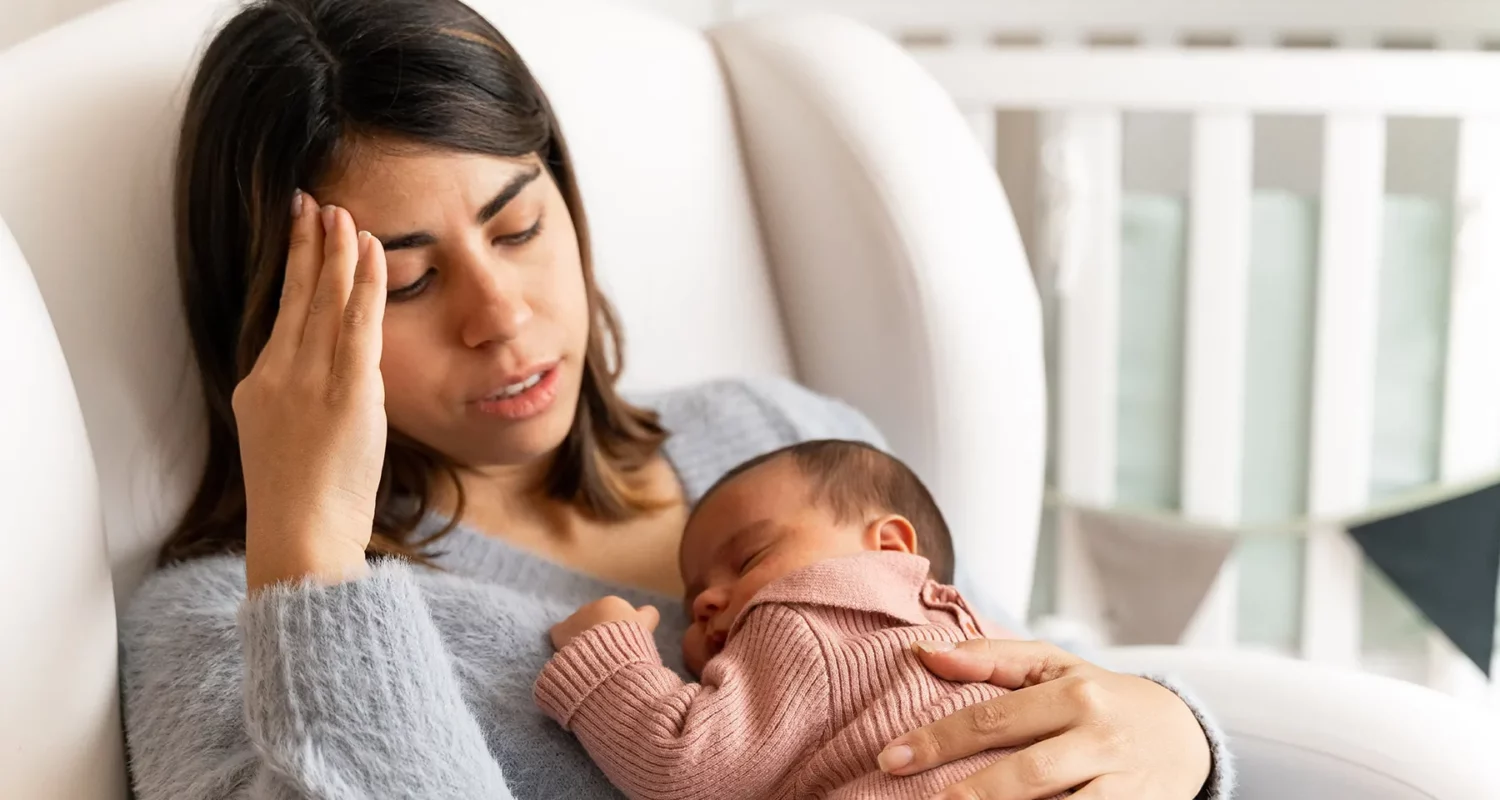
Why can the birth of a long-awaited child plunge a mother into a state of depression? We explore this with the help of research.
Many people do not believe in postpartum depression, and in 50% of cases it remains undiagnosed and therefore untreated [1], [2].
From this article you will learn:
- What is the difference between postpartum depression and baby blues?
- How long does postpartum depression last?
- How to identify symptoms of postpartum depression ;
- What are the causes of postpartum depression?
- How to cope with baby blues;
- What to do with postpartum depression.
Postpartum depression is a form of major depressive disorder, also known as clinical depression [1]. It occurs in one in 9 women [2].
According to the Diagnostic and Statistical Manual of Mental Disorders (DSM-5-TR), postpartum depression is included within the broader diagnosis of perinatal depression. The prefix “peri” indicates that the disorder encompasses pregnancy, childbirth, and the postpartum period [1].
“Baby blues” is a mild, short-lived mood disorder experienced by women who have recently given birth [3]. A state of sadness or melancholy, baby blues affects 40% of new mothers and is short-lived. Approximately 2–3 out of 10 women experience baby blues, which progresses to postpartum depression [1].
The symptoms of baby blues and depression in the early stages are similar, appearing within the first three months after birth. However, while baby blues last up to two weeks, it’s impossible to say exactly how long depression will last [1], [4].
Mild symptoms of depression can last a long time and go unnoticed. However, 5% of women experience severe symptoms of postpartum depression even years after giving birth [5].
Recognizing the signs of depressive disorder isn’t easy. Sometimes, it’s tempting to simply deny it exists. Let’s look at the symptoms of depression. If you notice at least five of these symptoms and they persist for two weeks, it’s time to see a specialist.
Symptoms of postpartum depression include [1]:
- problems with sleep, falling asleep and waking up;
- changes in weight or appetite;
- loss of interest in activities that were previously enjoyable;
- loss of energy or motivation;
- depressed mood most of the day;
- a feeling of anxiety and irritation;
- low self-esteem;
- a feeling of hopelessness or guilt;
- lack of emotional connection with the child;
- thoughts of harming yourself or your child.
Doctors don’t fully understand what causes postpartum depression, but they believe it’s likely a combination of factors that build on each other and increase the likelihood of the disorder [6].
If there is a history of depression in the female line, especially severe depression, the risk of developing the disorder is higher than in others [1]. This can be explained by the fact that genes “program” the transport of serotonin, the hormone of joy [7]. Therefore, some people have less serotonin and are more prone to depression.
During pregnancy, estrogen and progesterone levels are extremely high. Within 24 hours after birth, these hormone levels quickly return to prenatal levels. Some experts suggest this may contribute to depression. In addition to female sex hormones, the thyroid hormone balance may also change after childbirth. If the thyroid gland produces fewer of these hormones, symptoms of depression may develop [2].
Any major life change can impact mental health, and having a baby is a major change that requires vitality and time to adjust [1].
The source of stress can be [1], [8]:
- lack of sleep;
- new social role;
- lack of support;
- the need to care for a newborn;
- changes in figure after childbirth.
The verb “cope” is quite applicable to baby blues, since this condition can be overcome with the right actions, with minimal medical intervention, or even without it [9].
The most useful tips can be remembered as the “7P ” rule [9]:
- Get plenty of sleep. Doctors and psychologists advise, “Sleep when your baby sleeps.” Don’t rush into chores as soon as your baby falls asleep—sleep is more important.
- Help. Your loved ones can help with the laundry. Don’t refuse help, giving in to the urge to do everything yourself. This doesn’t mean you’re failing as a parent, it’s not a sign of weakness, and it’s not a reason to feel guilty. Asking for help also allows others to show their love. They need it just as much as you do.
- Support. Talking to someone who won’t judge you is a good way to get rid of negative emotions. This could be a close friend or a psychologist.
- Walking. Simply walking increases the production of “happy hormones” in the brain, and these help combat the baby blues. To enhance the effect, vary your workouts. Try yoga, rhythmic aerobics, or special exercises that you can do while holding your baby [10].
- Have a good time. Do something you enjoy, even if it seems easier to meet a unicorn than to take five minutes for yourself. And no, watching TV or scrolling through your feed doesn’t count. It’s important to keep the activity creative: music, singing, dancing, and drawing have been shown to reduce the risk of postpartum depression [11].
- Partnership. Sometimes postpartum depression is exacerbated by distance between spouses, so it’s important to talk and decide to do something together at least once a day. Making tea and eating a chocolate bar, watching a TV series, or giving each other a foot massage with essential oils—this helps release the hormone oxytocin, which creates a feeling of trust and comfort [12], [13].
- Diet. A deficiency in omega-3 fatty acids , particularly eicosapentaenoic acid (EPA), which is found in animal products, has been linked to an increased risk of postpartum depression. Therefore, consume foods rich in omega-3 fatty acids [14].
“Maybe it’s not depression, I’m just tired?” This thought gives hope that everything will pass soon, preferably on its own. But such a scenario is unlikely if you’re dealing with a depressive disorder. The main difference between postpartum depression and the baby blues is that the former requires treatment [1].
Antidepressants are the mainstay of depression treatment. They regulate the production of chemicals in the brain that control emotions. They primarily help increase levels of serotonin and norepinephrine—two neurotransmitters that maintain a positive mood and alertness [15].
It can take several weeks for antidepressants to work. Sometimes the first antidepressant doesn’t work, so another medication must be tried [15].
Several psychotherapies may be helpful in treating postpartum depression:
- Cognitive behavioral therapy improves problem-solving and coping skills, helps with decision-making, and identifies negative patterns of thinking and behavior. This type of therapy can significantly reduce the symptoms of postpartum depression and prevent their progression [16].
- Interpersonal psychotherapy is designed to last 3-4 months and helps resolve the current problem. It does not involve deep delving into or analyzing childhood traumas, but it does help improve relationships with loved ones [17].
- Family therapy may be particularly effective in treating postpartum depression if the main source of stress is an unhealthy family atmosphere [18].
There is evidence to suggest that transcranial magnetic stimulation (TMS) can help manage the symptoms of postpartum depression. TMS is administered every 4–6 weeks if antidepressants and psychotherapy have proven ineffective [1].
The brain is exposed to a changing magnetic field, which creates electrical stimuli in specific areas. The method is approved by reputable organizations, including the US Food and Drug Administration (FDA), the American Psychiatric Association, the Canadian Network for Mood and Anxiety Disorders, and the World Federation of Societies of Biological Psychiatry [19].